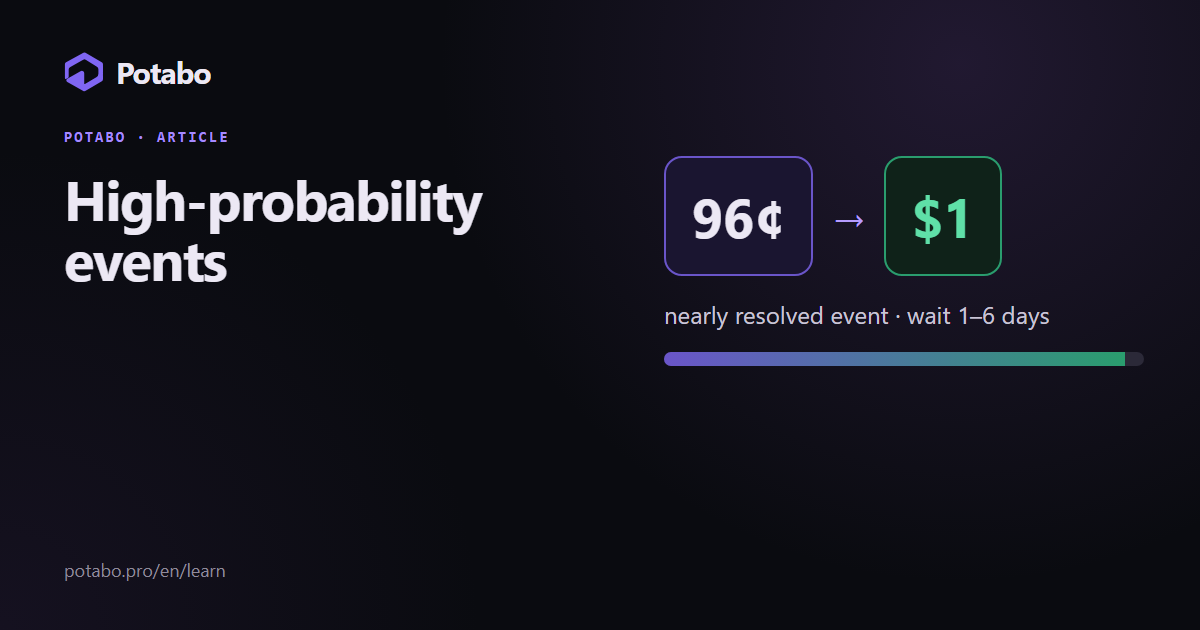
Imagine a friend borrows 95 cents from you and promises to give back a dollar in a couple of days. The friend is reliable and always pays back. You wait a little — and get slightly more than you gave.
High-probability events work much the same way. Polymarket has events whose outcome is almost clear, and the ticket for that outcome costs, say, 95¢. When the event resolves, the ticket becomes $1. You buy such tickets, wait a few days and collect the difference.
Where the return comes from
Why does a nearly certain outcome cost 95¢ and not a dollar? Because until the event resolves, the money in it is "locked". Some people don't want to wait a week and sell the ticket a bit cheaper to free up their money now. The market pays for waiting — and that payment goes to whoever is ready to wait.
How to choose events
- Topic. It's better to take events where the answer depends on clear facts: politics, economy, technology, world news.
- Timing. The sooner the event resolves, the sooner the money comes back and goes into the next trade.
- Price. A ticket that's too cheap means the market still has doubts. One that's too expensive leaves almost nothing to earn.
- Rules. Read exactly how the event resolves and where the answer comes from.
Why doing it by hand is inconvenient
There are hundreds of such events on Polymarket, and new ones appear every day. By hand you'd have to scan markets daily, read the rules, calculate the return per day of waiting and track when money frees up. It's boring, long work — exactly right for a program.
How the Potabo bot does it
Once a day the bot scans the venue and picks suitable outcomes by your topics, timing and price. Then it ranks them by return per day of waiting and enters with small amounts. When an event resolves and money frees up, the bot takes the next one. And so on, until you stop it.
Frequently asked questions
How long does one trade last?
Usually 1 to 6 days, until the event resolves.
Why is the return per trade small?
Because nearly certain outcomes are never cheap: the higher the chance, the higher the price and the smaller the gap to a dollar.
Can I sell the ticket before the event resolves?
Yes, you can sell at any time while the market is open. But usually it's held to the end: that's how the strategy is designed.
What if the event resolves differently than expected?
It happens — "nearly resolved" isn't "resolved" yet. That's why the strategy splits the budget into many small trades across different events.
Can I try it without money?
Yes. On demo the bot picks and buys the same events, only with virtual money.
Live Polymarket markets and virtual money: test any strategy without risk.
Read also
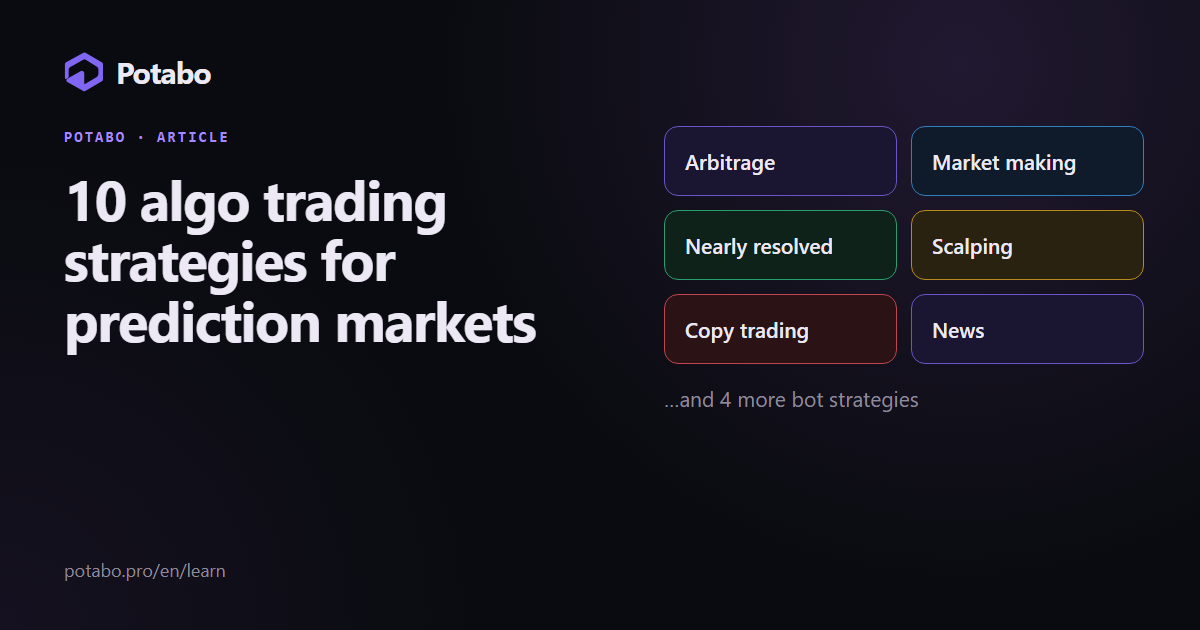
Which strategies bots use on Polymarket: arbitrage, market making, nearly resolved outcomes, scalping, copy trading. How each one works and where the catch is.
6 min read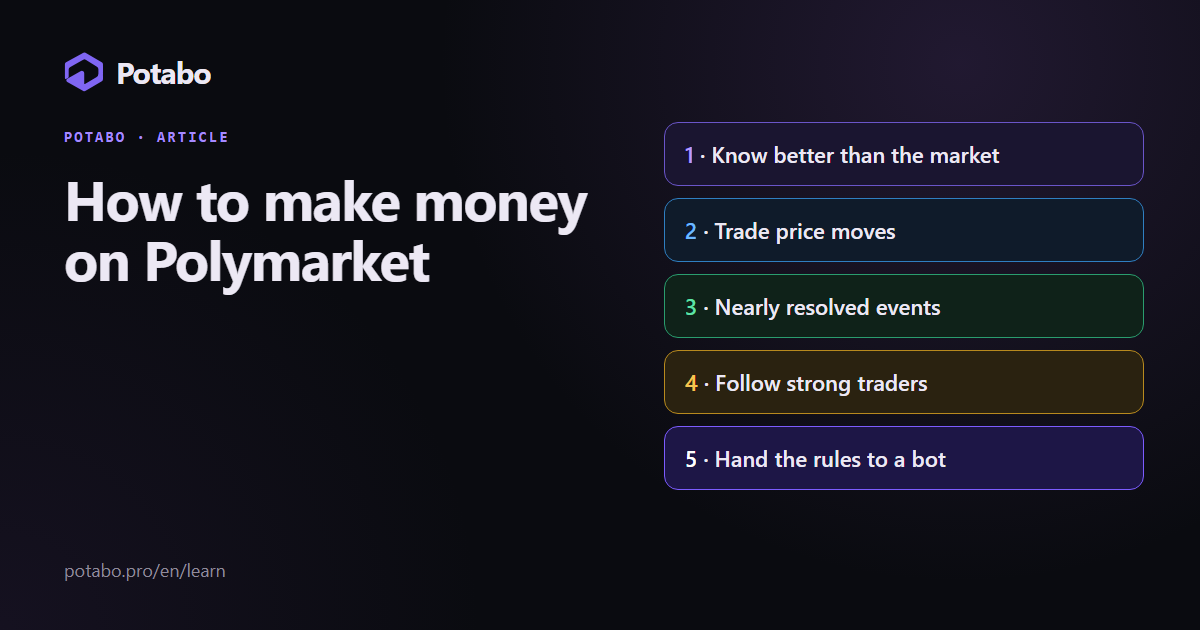
How people make money on Polymarket and prediction markets: forecasts, trading price moves, nearly resolved events, copy trading and bots. In plain words, with examples.
4 min read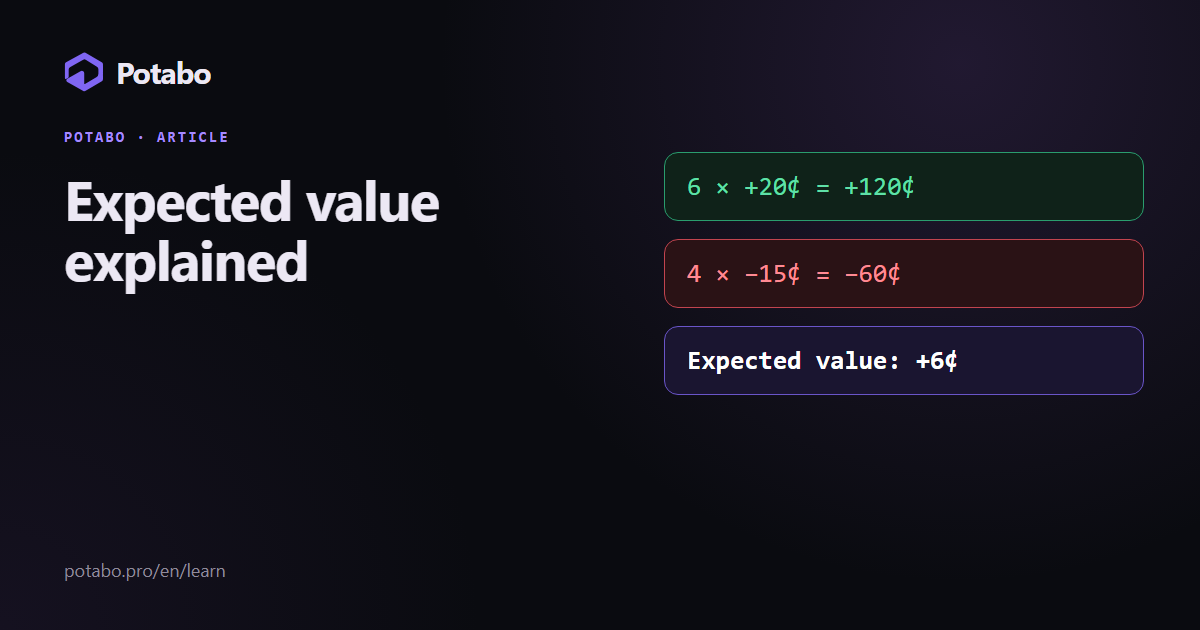
What a trading strategy's expected value is, how to calculate it on your fingers, why the share of winning trades says little on its own and how this helps you choose a bot.
4 min read