Picture a claw machine. Each try costs 10 cents. Sometimes you grab a toy worth a dollar, but more often you get nothing. Is it worth playing? Remembering one lucky try isn't enough. You need to know how much you get on average per try.
Expected value is exactly that — "on average per try". In trading it's the average result of one trade if you repeat it many, many times. Positive — the strategy makes money. Negative — it loses, however good individual trades may look.
How to calculate it on your fingers
You need three numbers:
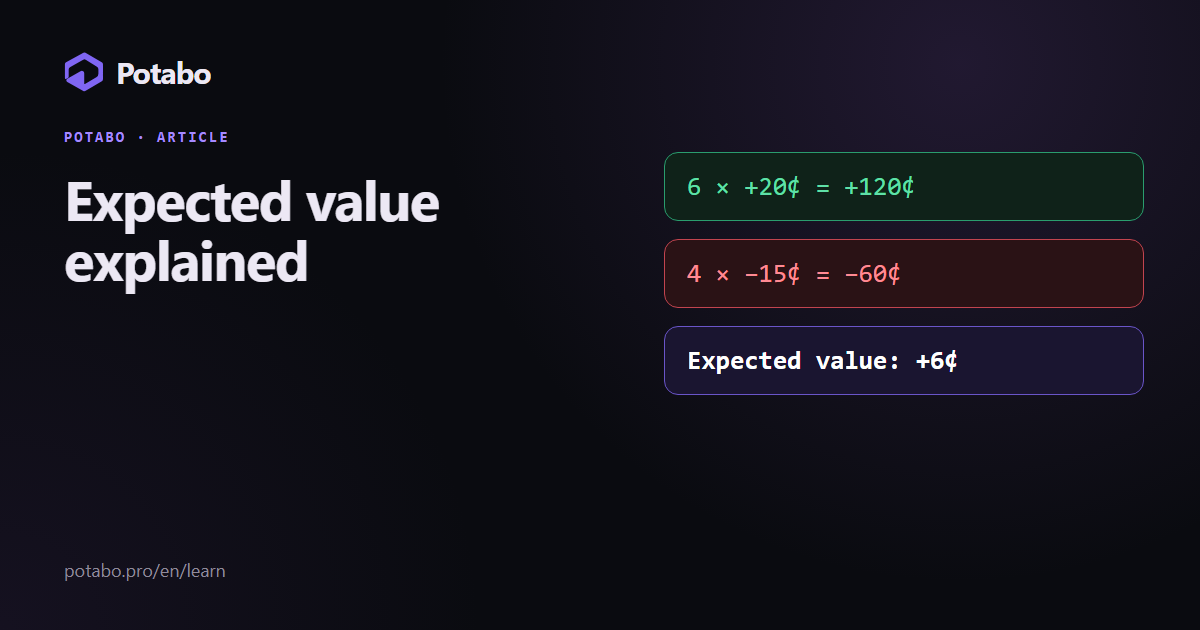
- How often the strategy wins — for example, in 6 trades out of 10.
- How much a winning trade brings on average — for example, 20¢.
- How much a losing trade takes on average — for example, 15¢.
Then simple arithmetic: what the wins bring minus what the losses take, all divided by the number of trades.
Don't forget fees: subtract them from every trade before drawing conclusions.
Why the share of wins is misleading
Imagine two students. One solves many easy problems worth 1 point each. The other solves fewer, but worth 5 points each. Who scored more? It depends not only on the number of problems solved but on their "weight".
Trades are the same. A strategy can win often but a little — or less often but bigger. You can't compare them by the share of wins alone. Compare them by the average trade.
Why you need many trades
A coin was tossed 4 times and came up heads 3 times. Does that mean heads comes up 75% of the time? No — there were just too few tosses. Toss it a thousand times and you'll get close to 50%.
Strategies are the same: a dozen trades won't reveal the expected value. You need dozens and hundreds. That's why a strategy is tested on history and on demo before real money — see How to test a strategy before investing.
Expected value and bots
A bot has an important advantage: it follows the rule the same way on every trade. A person changes the rules on the go after a couple of losses — and their expected value "drifts". A bot's stays as designed. So for a strategy with positive expected value, a bot is the natural executor: the more identical trades, the closer the total gets to what's expected.
Frequently asked questions
What is expected value in trading?
The average result of one trade if you repeat it many times. Positive — the strategy is in profit over the long run; negative — in loss.
Can you win often and still be in loss?
Yes, if losing trades take more on average than winning trades bring. That's why you look at the average trade, not just the share of wins.
Does positive expected value guarantee profit?
No. It's an "on average" estimate, and over a short stretch the result can differ. Markets also change, so expected value needs rechecking.
How many trades do I need to evaluate a strategy?
The more, the better. A few trades are too early for conclusions: you need dozens, ideally hundreds.
Live Polymarket markets and virtual money: test any strategy without risk.
Read also
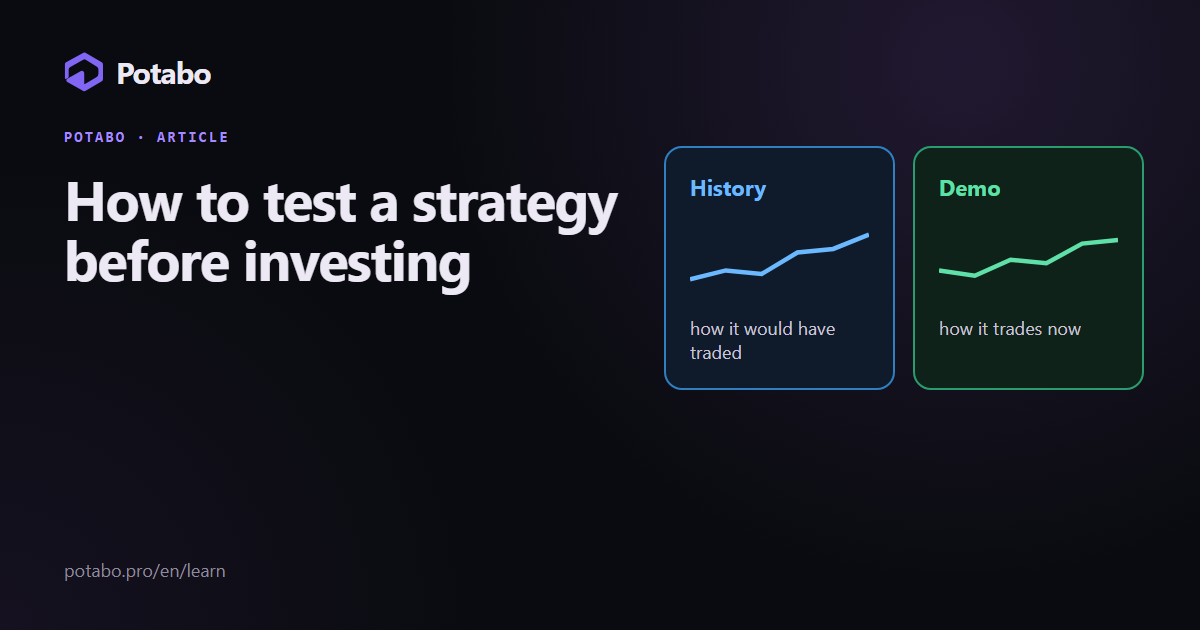
How to test a trading strategy on Polymarket without risk: testing on history (backtest), a demo account on the live market and what to look at in the results.
3 min read
Which strategies bots use on Polymarket: arbitrage, market making, nearly resolved outcomes, scalping, copy trading. How each one works and where the catch is.
6 min read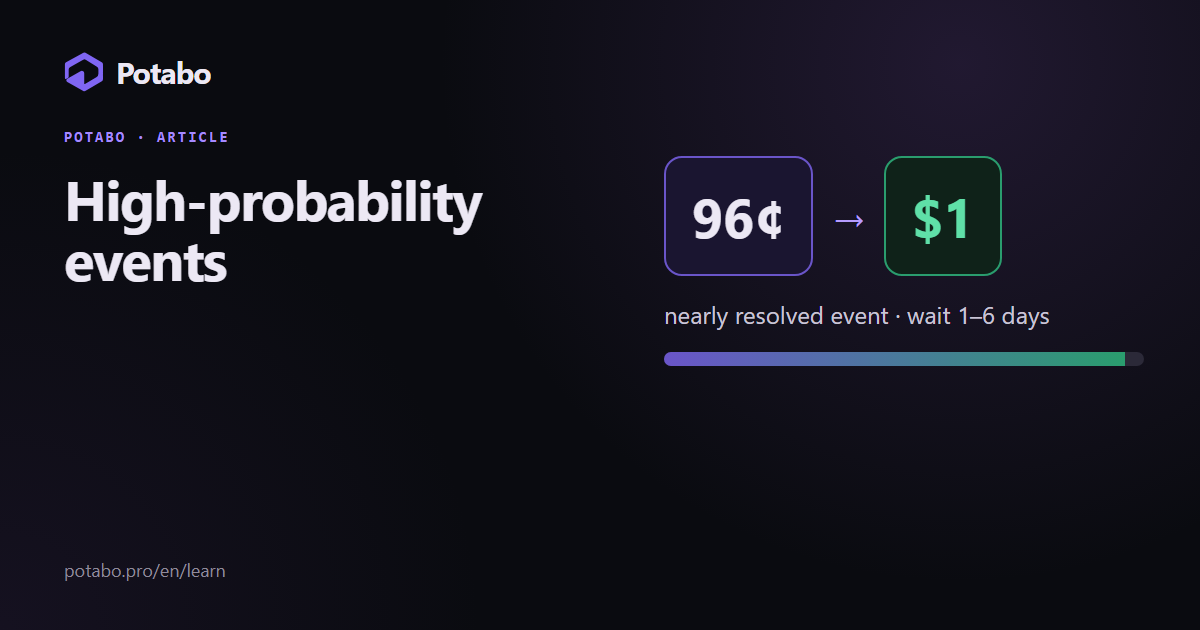
How the strategy of buying nearly resolved outcomes on Polymarket works: where the return comes from, how to choose events and timing, and how the Potabo bot automates it.
4 min read