Before jumping into a pool, you test the water with your hand. Is it cold? Is it shallow? A couple of seconds of checking makes the jump safe.
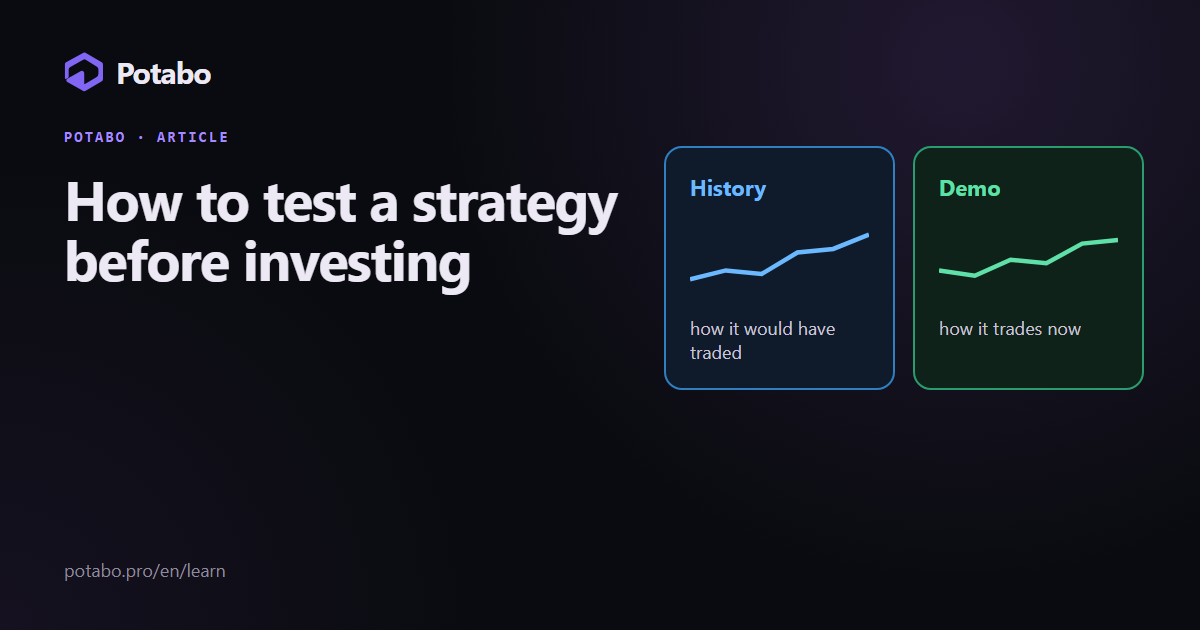
Testing a strategy is the same, only for money. Before trusting a bot with a real amount, it's worth seeing how the strategy behaved in the past and how it behaves now. There are two tools for that: history and demo.
Tool 1. Testing on history
This is also called a backtest. Recorded market data from past weeks is run through the strategy's rules: where it would have bought, where it would have sold and how it would have ended.
Plus: it's fast. In minutes you see the strategy's behavior in hundreds of situations.
Minus: the past doesn't repeat exactly. Markets change, and what worked yesterday may work worse tomorrow.
Tool 2. Demo on the live market
Demo is the real Polymarket market right now, only the money is virtual. The bot sees the same prices and makes the same decisions as on a live account. It's the most honest test: no fitting to the past.
Plus: you see the strategy in today's conditions.
Minus: it takes time. For reliable conclusions you need a noticeable number of trades.
What to look at in the results
- Number of trades. Five winning trades in a row prove nothing yet. The more trades, the more reliable the conclusion.
- Average result of one trade. This is the key number. How to calculate it — in Expected value explained.
- Share of winning trades. Useful, but says little on its own: what one winning trade brings also matters.
- Fees. Look at the result after fees.
- Time of day and markets. Sometimes a strategy works better at certain hours or on certain coins.
How testing looks in Potabo
Frequently asked questions
How long should I keep the bot on demo?
Until it has a noticeable number of trades. For fast strategies that may be a few days, for slow ones a few weeks.
Will demo and live results match?
Closely, but not exactly: on a live account your orders move the price a little, and the market is different every day.
What is a backtest?
Testing a strategy on recorded past data: how it would have traded if it had been running back then.
Do I have to pay for demo?
No. Demo works without a deposit, and the PRO plan is free for the first 7 days.
Live Polymarket markets and virtual money: test any strategy without risk.
Read also
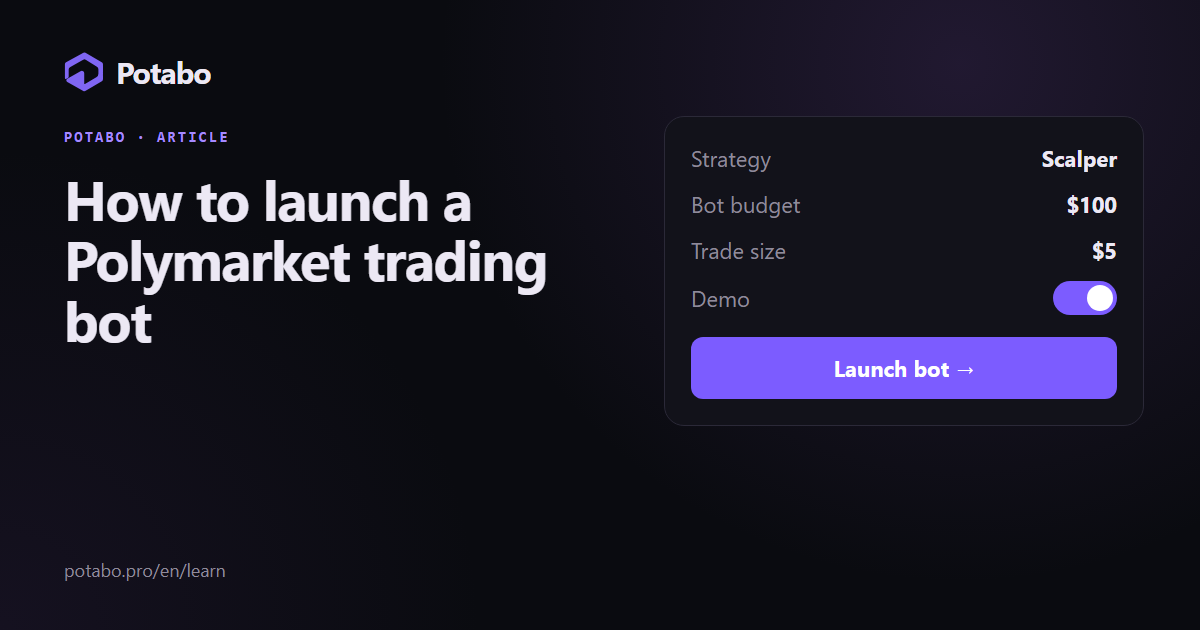
A step-by-step guide: how to pick a strategy, set the budget and trade size, run the bot on demo and switch it to a live Polymarket account.
3 min read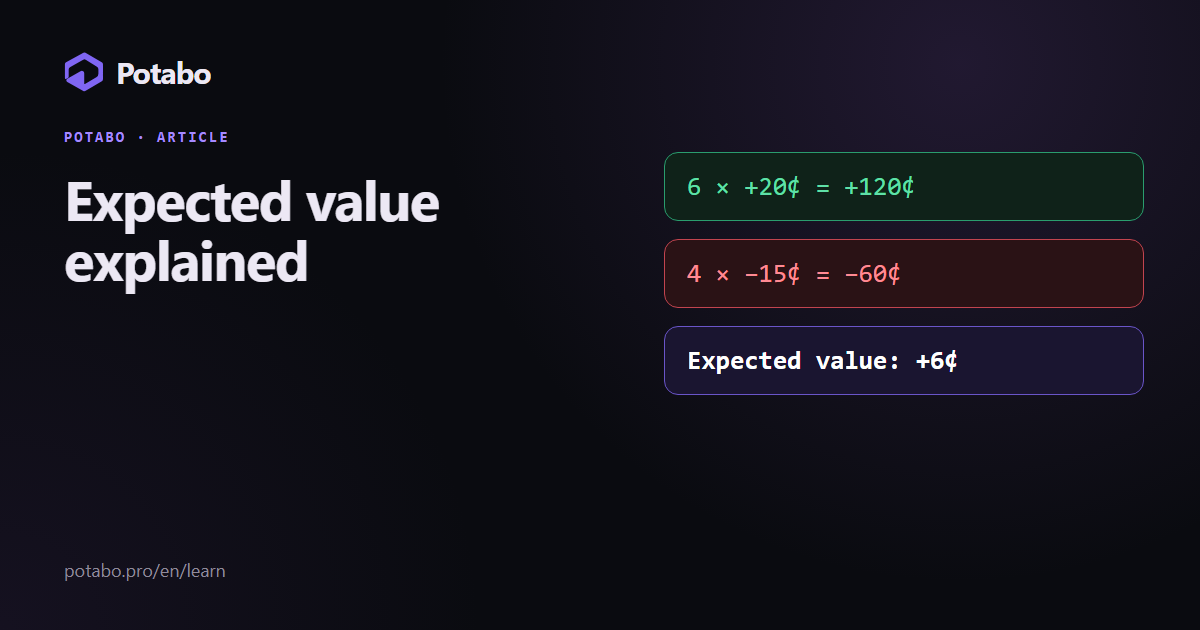
What a trading strategy's expected value is, how to calculate it on your fingers, why the share of winning trades says little on its own and how this helps you choose a bot.
4 min read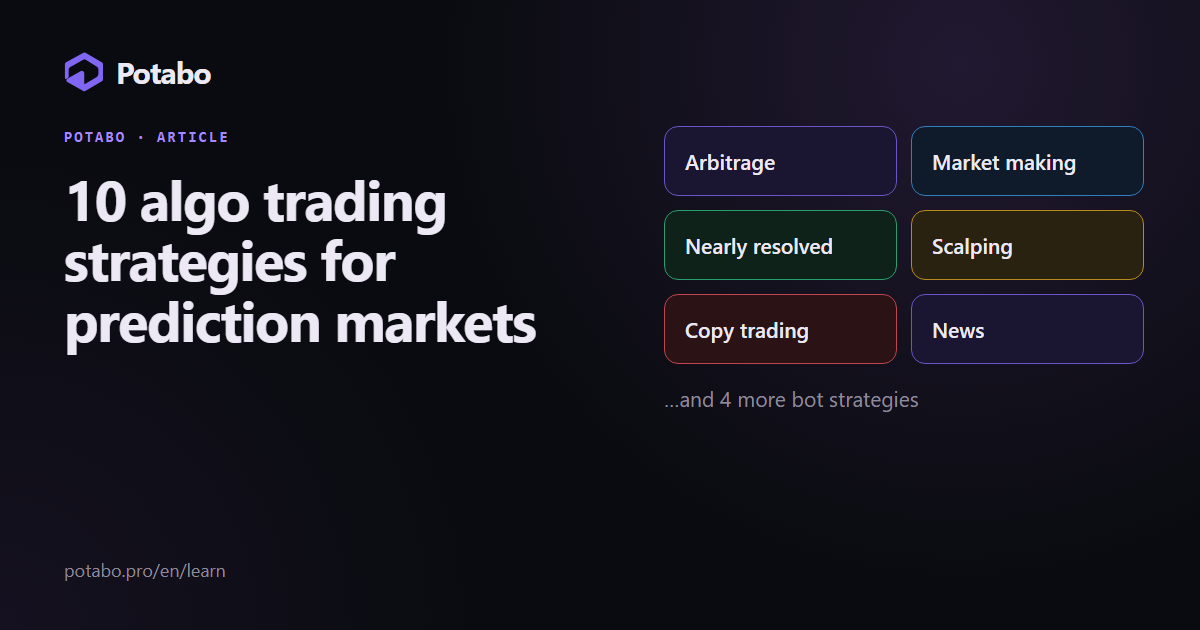
Which strategies bots use on Polymarket: arbitrage, market making, nearly resolved outcomes, scalping, copy trading. How each one works and where the catch is.
6 min read