Imagine a game: you toss a ball, and everyone argues whether it will land to the left or right of your hand. While the ball is high, it's hard to guess. But a moment before it lands, you can already see where it's going — and there's little left to argue about.
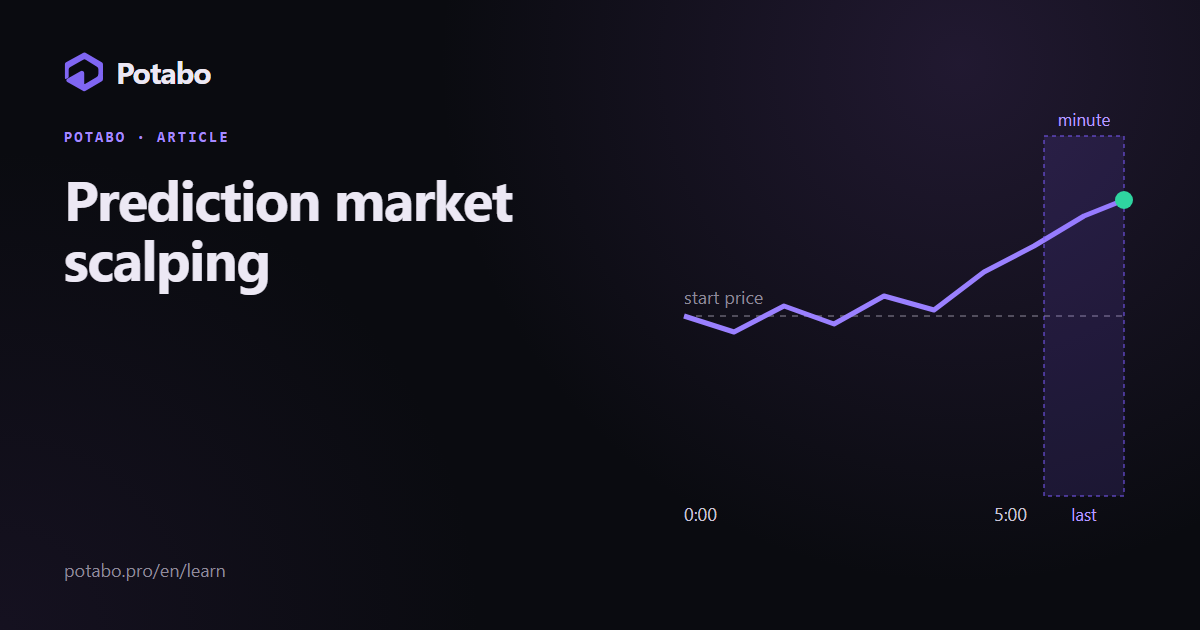
Prediction market scalping works in a similar way. Polymarket has 5-minute "Up or Down" markets: will Bitcoin be higher in five minutes than at the start? These markets open every five minutes, 288 times a day, for BTC, ETH, SOL, XRP and other coins. A scalper makes many short trades, entering when the outcome is almost visible.
How a 5-minute market works
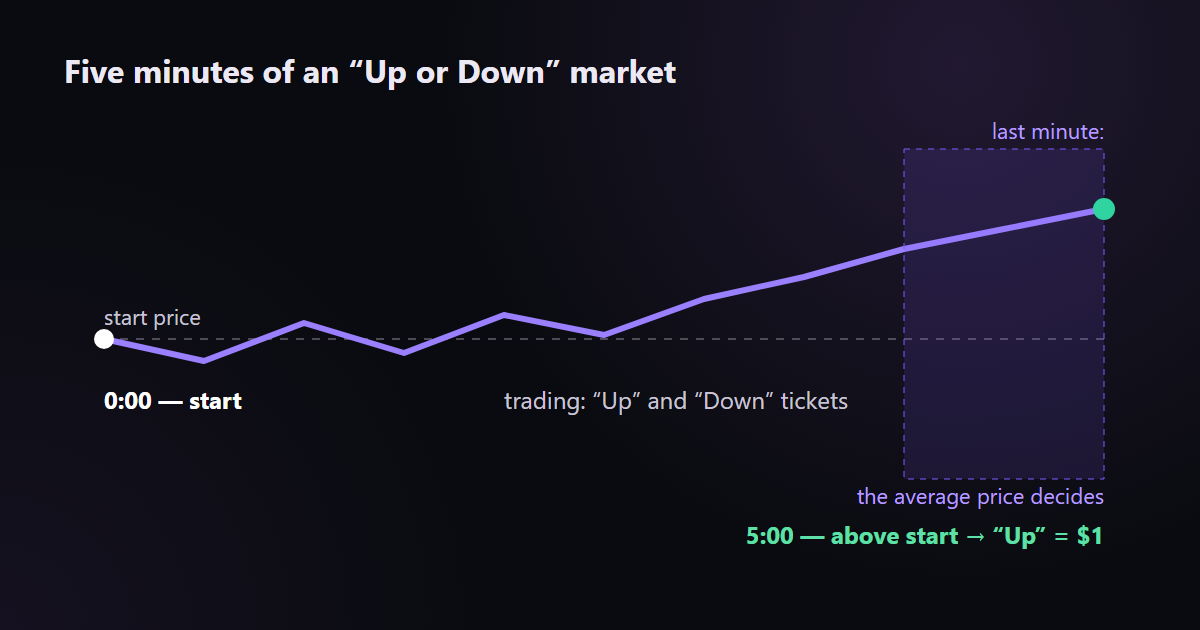
- Start. At the beginning of the round the coin's price is recorded — the "start price".
- Trading. For five minutes people buy "Up" and "Down" tickets. The ticket price shows how likely the market thinks each outcome is right now.
- Result. At the end the price is compared with the start price. Higher — "Up" tickets become $1; lower — "Down" tickets do.
The idea of scalping
For most of the round the price hovers around the start, and the outcome is almost random. Closer to the end the picture clears up: if the coin has moved noticeably away from the start price, it has little time left to come back. The market sees this, and the ticket for that side gets more expensive.
A scalper looks for the moment when the outcome is clear enough but the ticket isn't worth a dollar yet — and holds it to the result. One trade brings a little, but there are a great many rounds.
Why it's almost impossible by hand
- Seconds decide. While you look at the chart and click, the ticket price has already changed.
- 288 rounds a day per coin. Nobody can sit at a screen around the clock. A couple of hours off means dozens of missed trades.
- You need the right price. You have to compare with the price the venue uses, keeping the last-minute averaging in mind. You can't judge that by eye from an exchange chart.
- Fees. On short markets Polymarket charges a fee to those who buy at the ready price. It eats part of every profit.
- Emotions. A rule works only over the long run. After three losses in a row a person starts changing the rules. A program doesn't.
How the Potabo bot does it
The Potabo scalper watches every round of the chosen coin without breaks. It takes the price from the same stream the venue uses to decide the outcome, doesn't enter against the price move and holds the ticket to the result.
Frequently asked questions
How much can you earn by scalping?
It depends on the coin, time of day and trade size. Over the long run, what matters is the expected value of one trade after fees. Any promise of a specific income is a reason to be careful.
Which coins are available?
Polymarket runs 5-minute markets on BTC, ETH, SOL, XRP, DOGE, BNB and other coins. Smaller coins have fewer orders — it's harder to enter with a large amount.
Can I sell the ticket before the round ends?
You can, but it's usually not worth it: the gap between buy and sell prices and the fee get in the way. The Potabo scalper holds the ticket to the result.
Why doesn't the result match the exchange chart?
Polymarket settles on the Chainlink price averaged over the last minute, not on the last trade of a specific exchange. When the price is right at the line, the result can differ from what you saw on the chart.
Live Polymarket markets and virtual money: test any strategy without risk.
Read also
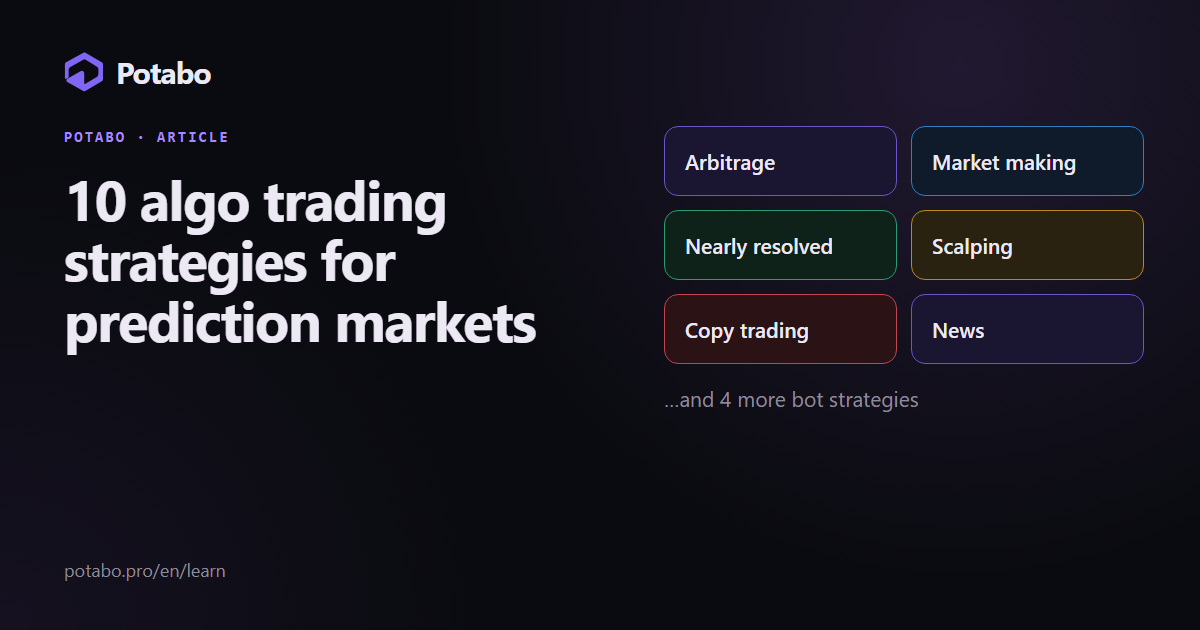
Which strategies bots use on Polymarket: arbitrage, market making, nearly resolved outcomes, scalping, copy trading. How each one works and where the catch is.
6 min read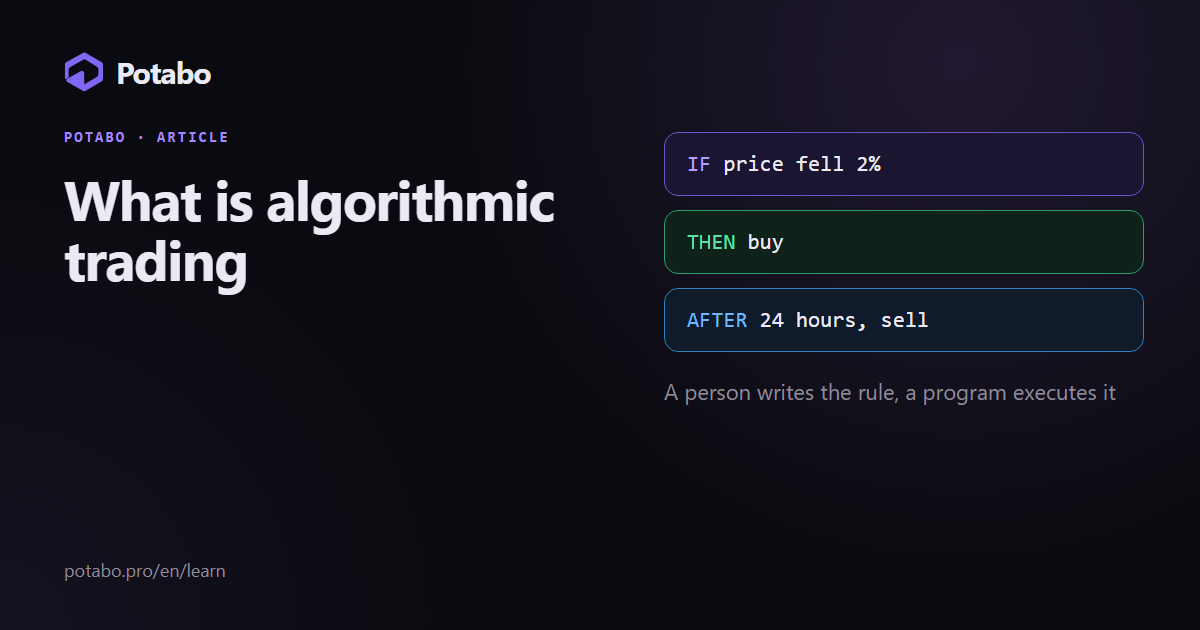
Algorithmic trading in plain words: how rule-based trading went from 1970s exchange terminals to crypto bots and prediction markets, and where Potabo fits in.
5 min read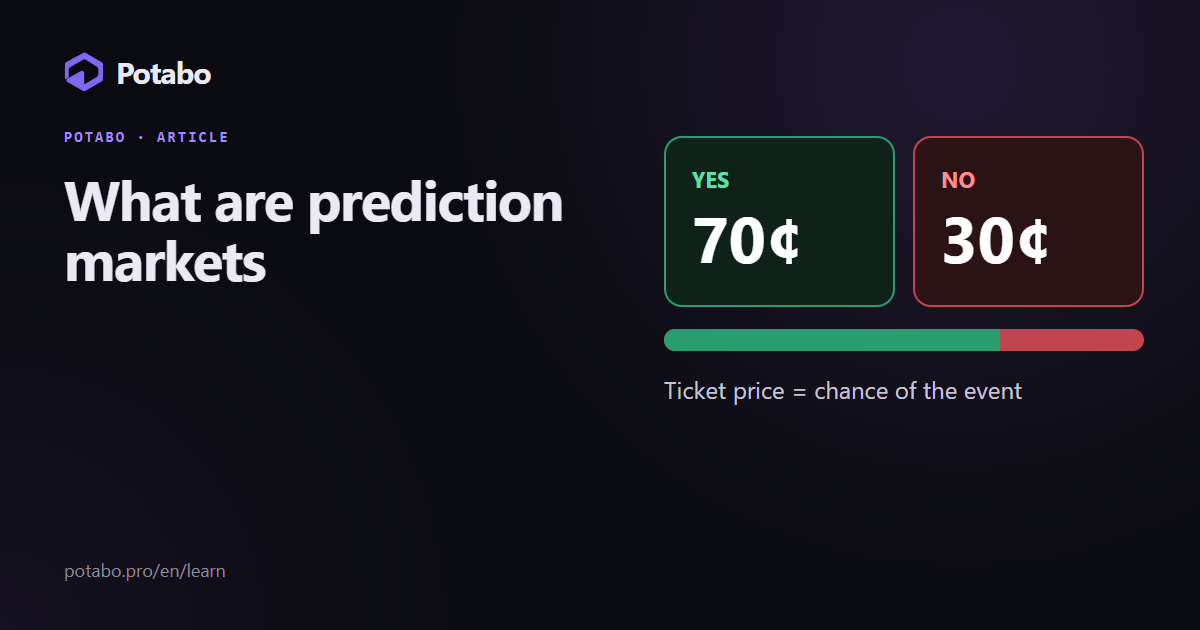
Prediction markets in plain words: how a price turns into a probability, how Polymarket differs from a bookmaker, where the profit comes from and what the risks are.
7 min read